
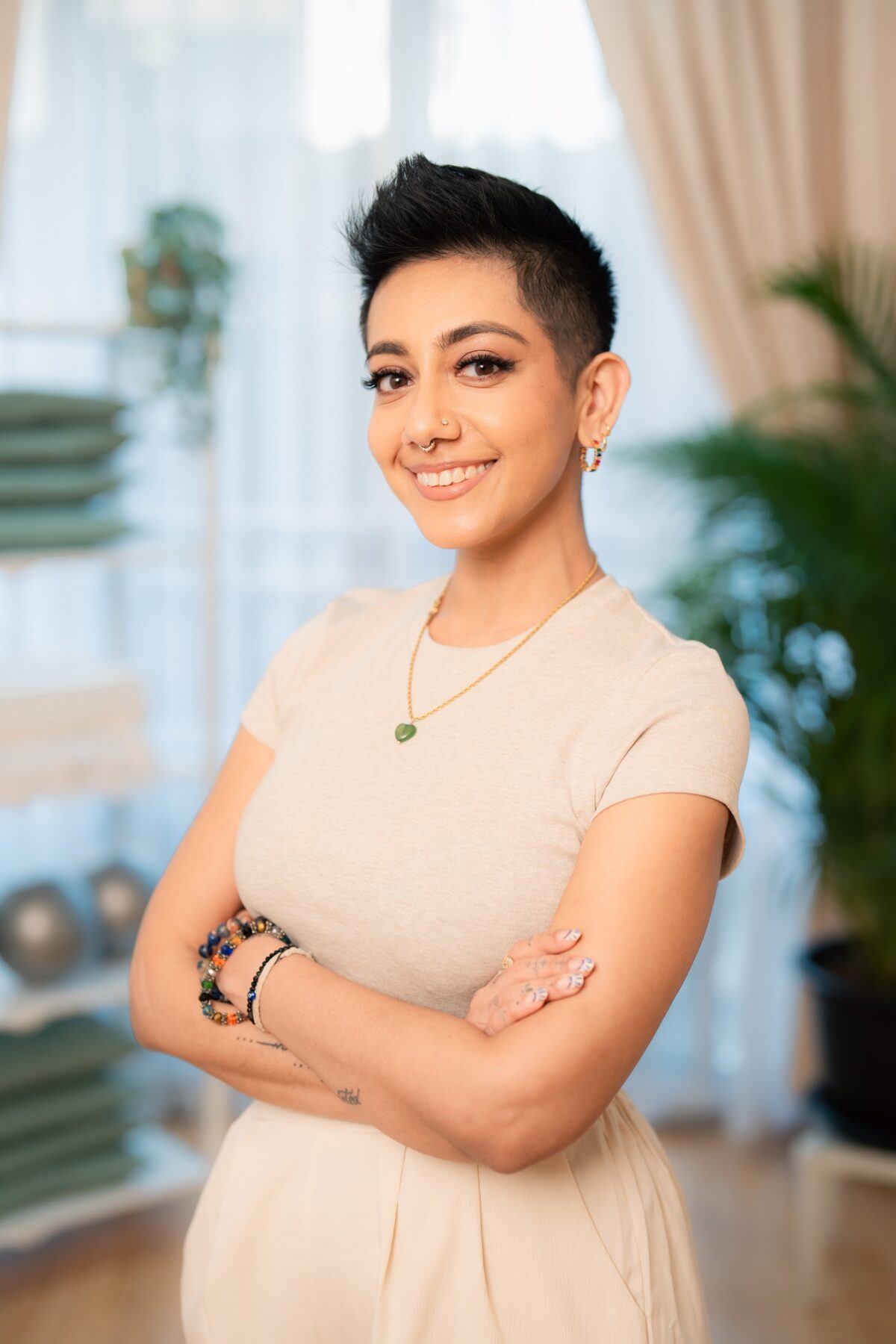
Swanti Suwanne, an international makeup artist turned wellness practitioner, transformed her life after a severe health diagnosis reshaped her priorities. Her journey from high-intensity creative work to integrative healing reflects resilience, discipline, and purpose, inspiring women to rebuild sustainably, regulate their lives, and pursue success without sacrificing well-being.
Q1) What inspired your transition from a creative career into wellness and healing?
For 15 years, I worked internationally as a makeup artist, especially in avant-garde and high-concept creative spaces. I built studios, teams, and a strong reputation, but I also built a life fuelled by adrenaline and constant output. When I was diagnosed with lupus, and later lupus nephritis that progressed to stage 5 kidney disease, my body forced me to confront sustainability. Healing was not a pivot; it was a systems correction. I rebuilt my life and business around regulation, longevity, and purpose.
Q2) What personal experience made you believe in holistic therapies?
I lived with lupus for seven years before it escalated to stage 5 kidney disease. During that time, I remained under medical supervision and did not abandon modern treatment. Alongside it, I began deep emotional and subconscious work with my spiritual teacher, Mrs. Dimple Anil, who trained me in radical self-accountability and disciplined inner dialogue. I later studied sound healing under YogShri Sivananda. As my nervous system stabilized and emotional patterns shifted, my biomarkers improved and medication was reduced gradually under medical guidance. That experience showed me healing must be integrative.
Q3) As a woman entrepreneur, what challenges did you face rebuilding your career?
Illness stripped away my momentum, my marriage, and much of my identity. I had built a career dependent on energy and endurance, which is not scalable. Rebuilding required humility and structural change. When I stepped into leadership at Prem and Yoga Ayurveda Center, a 16-year-old holistic center founded by my mother, I focused on service design, positioning, and integration rather than personality-driven growth. The challenge was not just rebuilding income — it was rebuilding sustainably.
Q4) How would you describe your philosophy of healing and self-transformation?
Healing is integration. It requires medical responsibility, emotional literacy, nervous system regulation, and consistency. Autoimmune disease taught me that the body reflects internal conflict. As an entrepreneur, I apply the same principle to business. If a system is inflamed, you examine structure, stressors, and patterns rather than masking symptoms. Self-transformation is not cosmetic reinvention; it is structural recalibration rooted in awareness and disciplined action.
Q5) What makes your approach to sound healing and mindful art therapy unique?
My approach is grounded in lived experience and lineage. Under YogShri Sivananda, I trained in the science of frequency and nervous system regulation. Sound is not aesthetic; it creates coherence. Mindful doodle art, taught to me by Sapna Sabharwal, dismantled perfectionism and allowed emotional release beyond language. Together, these modalities regulate stress, rewire subconscious patterns, and prevent burnout. It is not spiritual entertainment — it is structured recalibration.
Q6) In a fast-paced world, how can women realistically prioritize well-being?
We must redefine productivity. Women are conditioned to overfunction and equate exhaustion with ambition. Sustainable leadership requires nervous system awareness — scheduled rest, emotional processing, boundaries, and daily regulation practices. You cannot scale a business if your physiology is collapsing. Well-being is not indulgence; it is infrastructure.
Q7) What vision do you have for the future of your wellness centers?
Prem and Yoga Ayurveda Center became the bridge between my personal healing and structured service. Consc is the next evolution — a nature-based integrative retreat model combining sound healing, emotional rewiring frameworks, mindful art, and collaborative medical insight. My breakdown became research. Consc will codify that research into scalable programs merging science, spirituality, and accountability.
Q8) What message would you share with women who want to reinvent themselves?
Reinvention is not cosmetic; it is structural. You do not need to hit stage-5 collapse to change, but crisis often reveals truth. Burnout, addiction, and relational chaos are signals. When you rebuild from awareness rather than ego, survival becomes strategy. You do not just recover — you evolve.
Quote: Healing is integration. It requires medical responsibility, emotional literacy, nervous system regulation, and consistency.