
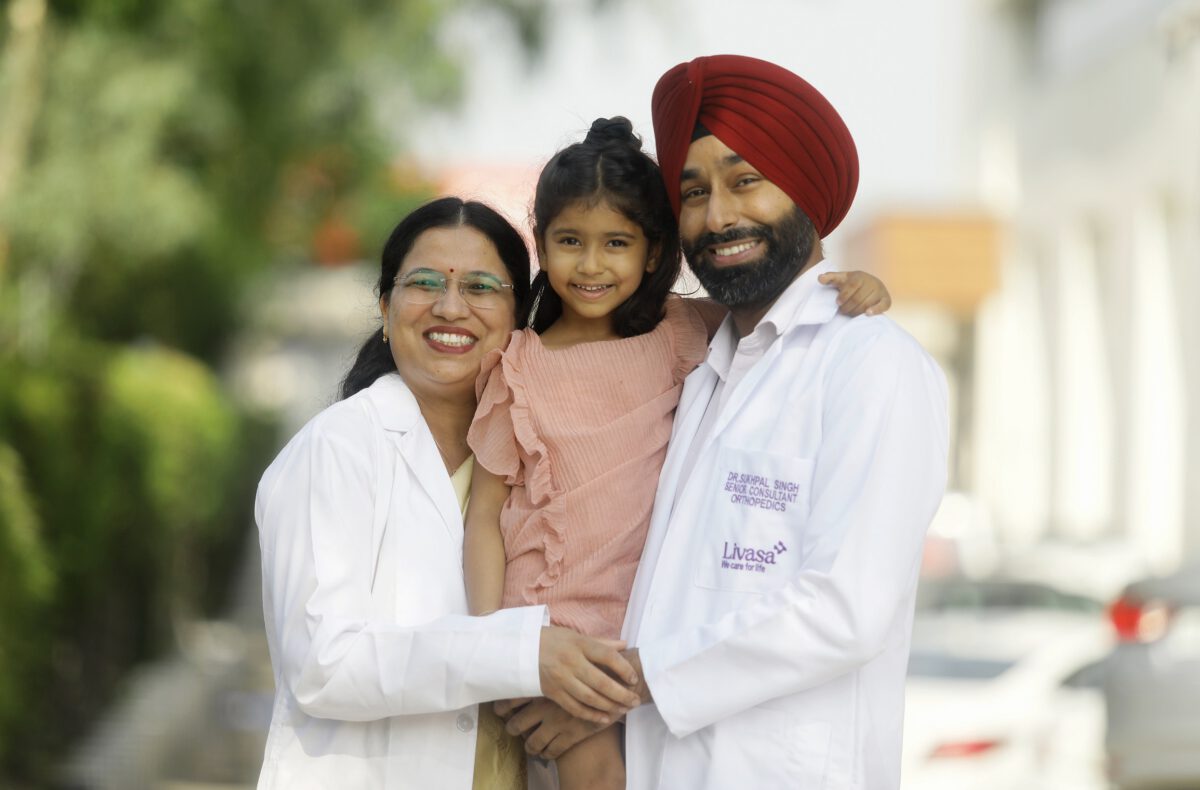
Dr. Sukhpal Singh Mann, Senior Consultant Arthroplasty, Trauma & Sports Injuries, Livasa Hospital, Amritsar, and Dr. Avneet Kaur, Assistant Professor, Guru Gobind Singh Medical College, Faridkot, bring together expertise from two distinct medical specialties. In this conversation, they discuss patient care, parenting, professional growth, and the values that shape their lives both inside and outside the hospital.
As doctors from different specialties, how do you balance demanding careers with family life?
Balancing two demanding medical careers is certainly challenging, but we have learned that quality time matters more than quantity. We consciously prioritize family moments, whether it is sharing meals, attending our daughter’s school activities, or setting aside dedicated family time despite busy schedules. Communication, mutual support, and understanding each other’s professional responsibilities help us maintain balance. Our five-year-old daughter remains at the centre of our decisions, and we strive to ensure she grows up in a nurturing and loving environment.
What is one thing you admire most about each other’s approach to patient care?
Dr. Sukhpal: What I admire most about Avneet is her patience and empathy. Paediatricians do much more than treat children—they also support and guide anxious parents. She does this with remarkable compassion, understanding, and clarity.
Dr. Avneet: I admire Sukhpal’s dedication to restoring mobility and improving quality of life. Whether it is a joint replacement patient or someone recovering from trauma, he approaches every case with precision, sincerity, and a genuine commitment to helping patients regain independence.
Dr. Sukhpal, what are some of the biggest advancements you have seen in joint replacement surgery over the years?
Joint replacement surgery has evolved tremendously. Advanced implant designs, minimally invasive surgical techniques, computer-assisted and robotic technologies, augmented reality-assisted procedures such as WALK3, enhanced pain management protocols, and rapid recovery programs have significantly improved outcomes. Patients today experience less pain, shorter hospital stays, faster rehabilitation, and better long-term function than ever before. These innovations have made joint replacement safer, more precise, and increasingly patient-friendly.
To read the full article, please log on to the link below:
https://www.magzter.com/IN/SANBROS-MEDIA/Urban-Melange/Fashion/All-Issues